.svg)

 FREE EBOOK DOWNLOAD


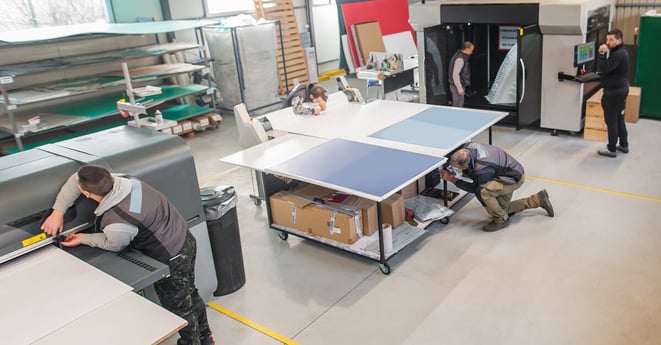
Commercial print shops are under more pressure than ever. Customers expect faster turnarounds, real-time updates, consistent pricing, and fewer errors while margins continue to tighten. In 2026, the print shops that thrive won’t necessarily be the ones running the fastest presses, but the ones running the smartest workflows.
The good news? Automation on the front end of the print process — job intake, preparation, and customer communication — can deliver immediate gains without disrupting production.
The Hidden Bottleneck: Manual Front-End Workflows
Many commercial print operations have invested heavily in production technology, yet still rely on email chains, handwritten job tickets, spreadsheets, and manual file checks to move work through the shop. These front-end inefficiencies often cause:
- Incomplete or incorrect job submissions
- Time-consuming back-and-forth with customers
- Missed deadlines due to unclear approvals
- Costly reprints caused by file or spec errors
In 2026, manual intake isn’t just inefficient; it’s a competitive disadvantage.
Automating Job Intake: Cleaner Orders, Faster Starts
Modern job intake automation replaces fragmented submission methods with standardized, digital workflows. Customers submit jobs through online portals or structured forms that capture everything upfront: file specs, quantities, finishing requirements, deadlines, and billing details.
The result?
- Fewer clarifying emails and phone calls
- Cleaner, more consistent job tickets
- Faster handoff from CSR to prepress
- Improved customer satisfaction from day one
By removing guesswork at intake, print teams reclaim hours every week and reduce errors before a job even hits prepress.
Smarter Job Prep: Let Automation Do the Heavy Lifting
Job preparation is another prime candidate for automation. File validation, preflight checks, naming conventions, and routing rules can all be automated to ensure jobs move smoothly without constant manual oversight.
Automation can:
- Flag file issues before production begins
- Route jobs to the right device or workflow automatically
- Reduce touchpoints between departments
- Maintain consistency regardless of volume or staff changes
Instead of reacting to problems late in the process, automated job prep helps teams prevent them entirely.
Proactive Customer Communication (Without the Extra Work)
One of the biggest pain points in commercial print is customer communication. Status update requests, approval reminders, and delivery questions can overwhelm CSRs and sales teams.
Automated communication workflows solve this by keeping customers informed without manual effort. Triggered notifications can alert customers when a job is received, approved, in production, or ready for pickup while internal teams stay aligned behind the scenes.
This creates:
- Fewer inbound “where’s my job?” inquiries
- Faster approvals and fewer delays
- A more professional, modern customer experience
In a competitive market, clear communication becomes a differentiator.
Why This Matters for 2026 (and Beyond)
As labor challenges persist and customer expectations rise, automation isn’t about replacing people; it’s about enabling them. By removing repetitive tasks from intake, prep, and communication, print teams can focus on higher-value work like quality control, customer relationships, and strategic growth.
Print shops that automate their front-end workflows today are better positioned to scale tomorrow without adding headcount or complexity.
Final Thought: Modernization Without Disruption
You don’t have to overhaul your entire operation to see results. Strategic automation in job intake, preparation, and customer communication delivers quick wins while laying the foundation for long-term efficiency.
If you’re planning for 2026, the smartest move isn’t just faster presses; it’s smarter workflows.
Ready to modernize your print operation without disrupting production? Connect with SumnerOne to explore workflow automation built for commercial print environments.










.svg "SumnerOne-Logo_Main-White(RGB)")