.svg)

 FREE EBOOK DOWNLOAD


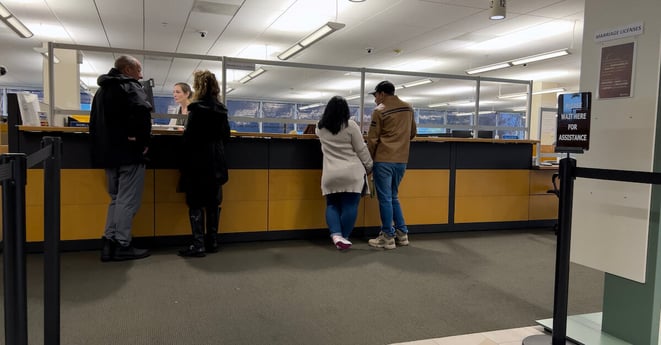
Government agencies across the country are entering the busiest—and most strategic—season of the year. Budget closeout isn’t just about spending remaining funds wisely; it’s about positioning your agency for stronger compliance, better audit performance, and improved citizen service in 2026.
But with expanding digital demands, hybrid teams, and rising scrutiny on operational efficiency, many agencies are discovering a hard truth: outdated print and document workflows are now core barriers to modernization and mission delivery.
Here’s where leaders should focus as they wrap up 2025 and prepare for a more efficient, more accountable 2026.
1. Make Year-End Purchasing Cycles Work for You, Not Against You
Agencies often enter Q4 with a “use-it-or-lose-it” mindset. But year-end funds can be used to solve long-standing workflow bottlenecks, especially those tied to print, routing, and document management.
Key areas to evaluate before budgets reset:
- Aging MFD fleets that increase downtime and service calls
- Production and wide-format needs for permits, records, signage, and public communications
- Document routing gaps that slow case management, constituent requests, or permits
- Security exposures in print networks that can put agencies at compliance risk
Replacing or right-sizing print infrastructure at year-end does more than reduce next year’s service burden. It helps agencies move toward secure, consistent, and auditable workflows.
2. Prioritize Modernization That Improves Compliance and Daily Operations
Modernizing document workflows isn’t simply a technology upgrade; it’s a strategic shift toward consistency, transparency, and accountable governance.
Modernization areas that deliver the biggest impact:
- Digitizing paper-heavy workflows: FOIA, HR, procurement, inspections, and permitting
- Automating repetitive tasks: routing, indexing, approvals, record retention
- Improving version control & access: especially for hybrid teams and inter-department collaboration
- Enhancing service delivery: faster turnaround on requests, fewer lost documents, smoother citizen interactions
When migration, scanning, print management, and workflow automation come together, agencies reduce friction and free staff to focus on higher-value work—not chasing documents through inboxes and file rooms.
3. Strengthen Audit Readiness with Clearer, More Trackable Workflows
Audit pressure is rising — whether it’s financial, compliance, grant-related, or operational. Agencies that rely on fragmented tools or manual processes face increased risk of:
- Missing documentation
- Inconsistent records across departments
- Uncontrolled access to sensitive files
- Redundant or outdated print devices
- Gaps in chain-of-custody or process visibility
Audit readiness starts with workflow visibility.
With centralized print monitoring, document management, secure scanning, and automated retention policies, agencies gain a defensible, consistent trail of each action taken within key processes.
Before 2026, ask these audit-readiness questions:
- Can we produce accurate records quickly when requested?
- Are our print and document systems secure and access-controlled?
- Do we have clear workflows for retention, archiving, and disposal?
- Is there unnecessary duplication of systems or equipment?
Leaders who address these questions now avoid last-minute scrambles and build a foundation of transparency that strengthens citizen trust.
4. Improve Citizen Service by Removing Internal Bottlenecks
Better citizen service doesn’t only come from new digital tools; it comes from eliminating the internal roadblocks that slow staff down.
Improvements that have immediate citizen-facing impact:
- Faster processing of forms, permits, and public records
- More consistent communication from teams working in hybrid environments
- Shorter response times to service requests
- Clearer, more professional printed and digital materials
- Reduced downtime on critical print devices used for communications, notices, and reports
When front-line teams have access to modern, reliable workflows, the public feels the difference.
5. Build a 2026 Roadmap That Is Realistic, Measurable, and Aligned to Mission
Your pre-2026 roadmap should focus on scalability, security, and service efficiency, including:
- Fleet standardization: remove outdated or redundant devices
- Centralized print management: gain insight into cost, usage, and security risks
- Workflow automation: streamline high-volume, high-impact processes
- ECM modernization: digitize and secure records, automate retention
- Cross-department optimization: ensure hybrid teams can access and route documents reliably
The agencies that thrive in 2026 will be those that make intentional moves now — not rushed decisions later.
Conclusion: Budget Closeout Is a Moment of Opportunity
As budgets reset and new mandates emerge, agencies have a brief window to invest in technologies and workflows that will make 2026 more efficient, more secure, and more citizen focused.
Better visibility. Better compliance. Better service. It all starts with taking control of the workflows that power your mission every day.
Our team helps agencies streamline print, digitize records, strengthen audit readiness, and improve citizen-facing workflows — all with secure, scalable solutions built for government. Let’s modernize your workflows together.






.svg "SumnerOne-Logo_Main-White(RGB)")